Chrysler 273 V8 -moottori oli merkittävä osa amerikkalaista autoteollisuutta 1960-luvulla. Se oli ensimmäinen Chrysler LA -sarjan moottori, joka esiteltiin vuonna 1964. Tämä moottori tarjosi kevyemmän ja tehokkaamman vaihtoehdon aiemmille A-sarjan moottoreille, ja se oli saatavilla useissa Plymouthin ja Dodgen malleissa.
Chrysler 273 V8 -moottorin tekniset tiedot
- Iskutilavuus: 273 kuutiotuumaa (4,5 litraa)
- Sylinterin mitat: Porauksen halkaisija 3,625 tuumaa (92,1 mm), iskun pituus 3,31 tuumaa (84,1 mm)
- Teho: 180 hv (134 kW) vakiona; 235 hv (175 kW) Commando-versiossa; 275 hv (205 kW) D/Stock-versiossa
- Puristussuhde: 10,5:1
- Nokka-akseli: Valurautainen, mekaanisilla tai hydraulisilla nostimilla
- Kampiakseli: Valettu tai taottu teräs
- Mäntä: Valettu alumiini
- Sylinterikannet: Kiilamaiset palotilat, yksi imu- ja yksi pakoventtiili per sylinteri
- Sytytystulpat: Sijaitsevat sylinterikannen sivulla, pakokanavien välissä
Vuoteen 1968 asti moottorissa käytettiin mekaanisia nostimia, minkä jälkeen siirryttiin hydraulisiin nostimiin, jotka vähensivät venttiilikoneiston melua.
Suorituskykyiset versiot
273 Commando (1965–1967)
Commando-versio oli suunnattu suorituskykyä arvostaville kuljettajille. Se sisälsi nelikurkkuisen kaasuttimen, korkeamman noston ja pidemmän keston omaavan nokka-akselin, vahvemmat venttiilijouset sekä erityiset mustat venttiilikopat alumiinisilla koristeilla. Moottorin teho oli 235 hv (175 kW) ja vääntömomentti 280 lb-ft (380 Nm) .
D/Stock 273 (1966)
Vuonna 1966 esiteltiin erityinen D/Stock-versio, joka oli suunniteltu NHRA:n D-stock-luokan kiihdytyskilpailuihin. Tässä versiossa oli Holley 4-kurkkuinen kaasutin, 0,495" / 0,505" noston omaava nokka-akseli, viritetyt pakosarjat ja 10,5:1 puristussuhde. Teho oli 275 hv (205 kW) ja vääntömomentti 295 lb-ft (400 Nm) .en.wikipedia.org
Asennusajoneuvot
Chrysler 273 V8 -moottoria käytettiin laajasti eri malleissa vuosina 1964–1969. Se oli saatavilla seuraavissa ajoneuvoissa:
- Plymouth Barracuda (1964–1969): Erityisesti Formula S -versiossa Commando-moottorilla.
- Plymouth Valiant (1964–1969): Tarjolla valinnaisena moottorina.
- Dodge Dart (1964–1969): Sisälsi myös D/Dart-erikoisversion vuonna 1966.
- Plymouth Belvedere (1965–1967): 273 V8 -moottori oli saatavilla eri tehoversioina .
Viritysmahdollisuudet
273 V8 -moottori tarjoaa hyvät mahdollisuudet viritykseen:
- Imusarja: Alumiininen imusarja (esim. Edelbrock) parantaa virtausta ja vähentää painoa.
- Nokka-akseli: Mekaaniset nokka-akselit tarjoavat paremman suorituskyvyn; suosittuja vaihtoehtoja ovat Comp Camsin ja Hughes Enginesin mallit.
- Sytytys: Mopar Performance -sähkösytytys parantaa kipinän voimakkuutta ja luotettavuutta.
- Kaasutin: Holley 4160 tai 4150 -kaasuttimet tarjoavat paremman polttoaineen syötön; suositeltava koko enintään 650 CFM.
On tärkeää huomioida, että suuremman noston omaavat nokka-akselit vaativat vahvemmat venttiilijouset ja mahdollisesti sylinterikansien porttauksia optimaalisen suorituskyvyn saavuttamiseksi.
Yhteenveto
Chrysler 273 V8 -moottori oli merkittävä askel LA-sarjan kehityksessä, tarjoten kevyemmän ja tehokkaamman vaihtoehdon aiemmille moottoreille. Sen suorituskykyiset versiot, kuten Commando ja D/Stock, osoittivat moottorin potentiaalin kilpakäytössä. Vaikka se jäi myöhempien LA-sarjan moottoreiden, kuten 318:n ja 340:n, varjoon, 273 V8 on edelleen arvostettu moottori klassikkoautojen harrastajien keskuudessa.
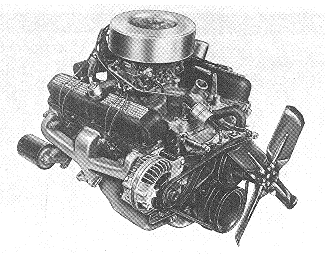
| The 273 Commando was available two ways in '66. The standard 235 HP version and a D/Stock version rated at 275 HP. The D/Stock version was available as both a limited production factory option, and an over-the-counter dealer option in '66. The option was intended to help the A body Mopars to compete in the D/Stock class with an advertised LBS/HP ratio range of 10.6 to 11.29. The option, which was offered from the factory without warranty, included a Holley 4160 carb, adapter plat, a 284 degree .495" I/ .505" E lift cam and spring set, tuned headers dumping into the stock exhaust, and, in the "D/Dart tested by Car Craft in August of '66, a 4.86:1 8-3/4" sure grip 3rd member. As Car Craft notes: Straight "out of the box" so to I have also seen references to the under rating by the factory of the 273 Commando's output (people have equated it with the "K" code 289 Ford at 271 HP), and I won't disagree with that. |
|||||||||||||||||||||||||||||||||||||||||||||||||||||||||||||||||||||||
| ITEM | SPECIFICATION | ||||||||||||||||||||||||||||||||||||||||||||||||||||||||||||||||||||||
|---|---|---|---|---|---|---|---|---|---|---|---|---|---|---|---|---|---|---|---|---|---|---|---|---|---|---|---|---|---|---|---|---|---|---|---|---|---|---|---|---|---|---|---|---|---|---|---|---|---|---|---|---|---|---|---|---|---|---|---|---|---|---|---|---|---|---|---|---|---|---|---|
| Carburetor: | 600 CFM AFB / Holley 4160 (D/Stock) | ||||||||||||||||||||||||||||||||||||||||||||||||||||||||||||||||||||||
| Bore: | 3.625" | ||||||||||||||||||||||||||||||||||||||||||||||||||||||||||||||||||||||
| Stroke: | 3.31" | ||||||||||||||||||||||||||||||||||||||||||||||||||||||||||||||||||||||
| Compression Ratio: | 10.5:1 | ||||||||||||||||||||||||||||||||||||||||||||||||||||||||||||||||||||||
| Cam: |
|
||||||||||||||||||||||||||||||||||||||||||||||||||||||||||||||||||||||
| Gross Horsepower: | 235 @ 5200 RPM / 275 @ 6000 RPM (D/Stock) | ||||||||||||||||||||||||||||||||||||||||||||||||||||||||||||||||||||||
| Torque: | 280 Ft/Lbs @ 4000 RPM / 295 Ft/Lbs @ 4400 RPM (D/Stock) | ||||||||||||||||||||||||||||||||||||||||||||||||||||||||||||||||||||||
 |
|||||||||||||||||||||||||||||||||||||||||||||||||||||||||||||||||||||||
|
|||||||||||||||||||||||||||||||||||||||||||||||||||||||||||||||||||||||
n
273 V8[edit]
The 273 cu in (4.5 L) was the first LA engine, beginning model year 1964 and offered through 1969, rated at 180 hp (134 kW). It had a bore and stroke of 3.625 in × 3.31 in (92.1 mm × 84.1 mm). It had a mechanical solid lifter valvetrain until 1968 when hydraulic lifters were introduced; hydraulic lifters generally make for a quieter valvetrain. The reciprocating assembly included a cast or forged steel crankshaft, drop forged steel connecting rods and cast aluminum pistons. The valvetrain consisted of a cast nodular iron camshaft, solid or hydraulic lifters, solid pushrods and shaft-mounted, malleable iron rocker arms (stamped steel on later hydraulic-cam engines). These actuated the overhead steel intake and exhaust valves. The cylinder heads featured wedge-shaped combustion chambers with a single intake and a single exhaust valve for each cylinder. Spark plugs were located in the side of the cylinder head, between the exhaust ports.[2]
A high performance 235 hp (175 kW) was offered 1965-1967, this was standard in the Barracuda Formula S model and optional in all other compact models excluding station wagons. It featured a 4-bbl. carburetor and matching intake manifold, chrome unsilenced air cleaner with callout sticker, longer-duration and higher-lift camshaft and stronger valve springs, 10.5:1 compression ratio, and special black wrinkle valve covers with extruded aluminum appliques. It was fitted to a low-restriction exhaust system with a 2.5 in (64 mm) exhaust pipe, collector-type Y-junction, and exposed resonator. In 1965 (only) the muffler was of "straight through" construction.
A special version was also available in 1966 only - it used a 0.5 in (12.7 mm) lift solid-lifter camshaft, fabricated-steel-tube exhaust, and a Holley 4-barrel carburetor, producing 275 hp (205 kW) (1 hp/cu in). It was available in the Dodge Dart only, and the car so equipped was called the "D-Dart", a reference to its classification in NHRA D-stock for drag racing, which was the car's only intended purpose.
n